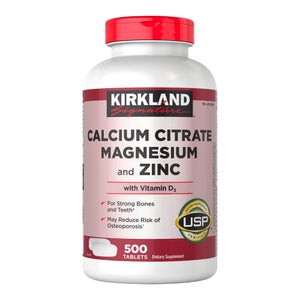
Kirkland Signature Calcium Citrate, Magnesium and Zinc, 500 Tablets
Costco Item: 588153
 30 people saved to wishlist
Added successfully!
You can check your wishlist.
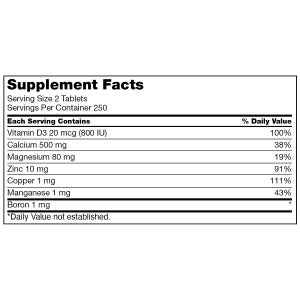
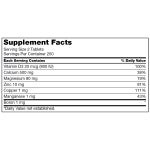
- Calcium Citrate 500 mg.
- Vitamin D3 20 mcg.
- Magnesium 80 mg.
- Zinc 10 mg.
Similar Deals



Product Details
Item may be available in your local warehouse, prices may vary.
Kirkland Signature Calcium Citrate, Magnesium and Zinc, 500 Tablets
Product details have been supplied by the Manufacturer, and are hosted by a third party.
The benefits of essential minerals plus Vitamin D
Get the benefits of essential minerals plus vitamin D from Kirkland Signature™. Each serving provides 500 mg of calcium, the primary mineral responsible for strong bones. This formula was carefully crafted to include vitamin D to assist with calcium absorption, as well as magnesium and zinc, two minerals involved in bone formation. The benefits of this product go beyond bone health to also support proper muscle contraction, a healthy immune system, and more!
• For strong bones and teeth
• May reduce the risk of osteoporosis*
• Supports healthy muscle contraction
Minerals
Image of sprouting grass with Element symbols
Minerals are earth-derived elements that cannot be produced by living organisms. and are introduced into the food chain by plants which acquire them from the soil.1 Essential minerals are important for health and can be classified into two categories, major minerals and trace minerals. Major minerals, such as calcium and magnesium, are those found in the body in amounts greater than 5 grams. Conversely, trace minerals, such as zinc, are found in the body in amounts less than 5 grams.
Calcium is the most abundant mineral in the body.2 Over 99% of the body's calcium is found in the bones and teeth where it provides structural support. The remaining 1% of calcium is found in the blood, muscle, and other soft tissues. The recommended dietary allowance (RDA) for calcium is between 1,000 - 1,200 mg/day for adults, depending on age and gender.3
Although it is not quite as abundant as calcium, approximately 25 grams of magnesium can be found in the adult body. A large percentage of the body's total magnesium is combined with calcium and phosphorus in the bones. The remaining is mostly found in soft tissues such as the muscles.4 Magnesium functions as an important cofactor for over 300 enzymes in the body. Enzymes are substances which help facilitate chemical reactions in the body and cofactors are compounds that are necessary for certain enzymes to function properly. The RDA for magnesium ranges between 310-420 mg/day for adults, depending on age and gender.4
The RDA for magnesium ranges between 310-420 md/day.
Zinc is a trace mineral but it plays a big role in the body. Zinc is popularly known as a mineral for supporting immune health, but it also has antioxidant properties and acts as a cofactor for more than 300 enzymes, making it an important nutrient for a variety of systems in the body.5,6 The RDA for zinc is 11mg/day for adult men and 8 mg/day for adult women.7
Zinc is popularly known as a mineral for supporting immune health.
Benefits
Image of bone with shield
Kirkland Signature™ Calcium Citrate, Magnesium & Zinc with Vitamin D3 provides essential nutrients important for supporting bone health. Over 99% of the body's calcium is found in the bones and teeth where it provides these hard tissues with strength and stability.
3
Adequate calcium with vitamin D as part of a healthful diet, along with physical activity, may reduce the risk of osteoporosis later in life. Vitamin D helps develop strong bones and teeth by enhancing the body's absorption of calcium. Magnesium is also essential for bone structure and it helps to regulate calcium transport. Zinc is involved in the synthesis of collagen, an important structural protein found in bone tissue.
In addition to supporting bone strength, calcium and magnesium support other vital systems in the body. Both are involved in nerve impulses and promote proper muscle contraction. Magnesium and zinc each serve as important cofactors for over 300 enzymes in the body, each! As such, magnesium is involved in the processes that create and release energy in the cells. Zinc assists in the formation of DNA and is also essential for cell division and growth. Through its role in cell division, zinc is able to assist rapidly dividing immune cells to meet the requirements of the immune system to keep you at your healthy best.
Provides essential nutrients important for supporting bone health.
Why Supplement?
Image of variety of cheese and assorted cold cuts and bread
According to the 2020-2025 Dietary Guidelines for Americans, many Americans do not get enough calcium and vitamin D. Thus, Calcium and vitamin D are identified as "nutrients of public health concern" since low intakes of these vital nutrients are associated with health concerns.
8
National dietary intake data shows a majority of Americans are consuming less than the recommended amounts of magnesium from food alone.
9
Excellent sources of calcium include dairy products such as milk, yogurt and cheese and zinc can be found in animal food sources such as oysters, beef and chicken. Zinc and calcium can also be found in plant sources but may not be as efficiently absorbed due to the presence of other nutritional factors also found in plants.
3,7
Individuals who avoid dairy products are at risk of calcium inadequacy. Zinc and calcium supplements may be particularly beneficial for vegetarians.
Magnesium can be found in foods containing dietary fiber such as green leafy vegetables, legumes and whole grains. Certain processing techniques inadvertently remove the magnesium naturally occurring in foods, making some processed foods such as refined grains poor sources of magnesium.
4
Additional dietary and lifestyle factors may also impact mineral status. Certain gastrointestinal conditions, alcohol and caffeine consumption can all negatively impact mineral status in the body.
These statements have not been evaluated by the Food and Drug Administration. This products is not intended to diagnose, treat, cure, or prevent any disease.
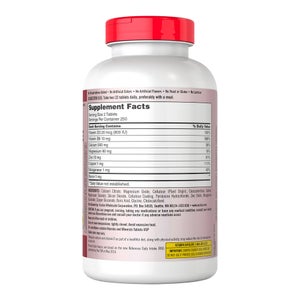
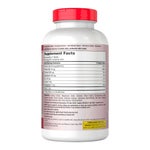
Supplement Facts
Supplement Facts and Actual product size
SUGGESTED USE
: Take two (2) tablets daily, preferably with a meal.
INGREDIENTS
: Calcium Citrate, Magnesium Oxide, Cellulose (Plant Origin), Croscarmellose Sodium, Magnesium Stearate, Silicon Dioxide, Cellulose Coating, Pyridoxine Hydrochloride, Zinc Oxide, Manganese Gluconate, Copper Gluconate, Boric Acid, Glycine, Cholecalciferol.
No Preservatives Added. No Artificial Colors. No Artificial Flavors. No Yeast or Gluten. No Lactose.
CAUTION
: If you are pregnant, nursing, taking any medications, planning any medical or surgical procedure or have any medical condition, consult your doctor before use. Discontinue use and consult your doctor if any adverse reactions occur.
Keep out of the reach of children.
Store at room temperature, tightly closed. Avoid excessive heat.
USP Verified
USP Verified Banner
This item is verified by the United States Pharmacopeia (USP) which is an independent, scientific, nonprofit organization that sets strict quality and purity standards for dietary supplements manufactured and distributed worldwide. The USP's drug standards are enforceable in the United States by the Food and Drug Administration.
References:
1. https://lpi.oregonstate.edu/mic/minerals
2. https://ods.od.nih.gov/factsheets/Calcium-HealthProfessional/
3. Institute of Medicine. 2011. Dietary Reference Intakes for Calcium and Vitamin D. Washington, DC: The National Academies Press.
4. Institute of Medicine. 1997. Dietary Reference Intakes for Calcium, Phosphorous, Magnesium, Vitamin D, and Flouride. Washington DC: The National Academies Press.
5. https://lpi.oregonstate.edu/mic/minerals/zinc
6. Keith A. McCall, et al, Function and Mechanism of Zinc Metalloenzymes, The Journal of Nutrition, Volume 130, Issue 5, May 2000, Pages 1437S–1446S,
7.Institute of Medicine. 2001. Dietary Reference Intakes for Vitamin A, Vitamin K, Arsenic, Boron, Chromium, Copper, Iodine, Iron, Manganese, Molybdenum, Nickel, Silicon, Vanadium, and Zinc. Washington DC: The National Academies Press.
8. U.S. Department of Health and Human Services and U.S. Department of Agriculture. 2020-2025 Dietary Guidelines for Americans. 85h Edition. December 2020.
9. https://ods.od.nih.gov/factsheets/Magnesium-HealthProfessional/#h3
Shipping & Returns
Standard shipping is via UPS SurePost. UPS SurePost may utilize USPS for the final delivery. Larger orders may be delivered via UPS Ground.
Express shipping is via UPS.
Please choose your shipping method at checkout.
An additional Shipping and Handling fee will apply to express shipments. This fee will be quoted at checkout.
*Delivery is available to Alaska and Hawaii; however, an additional Shipping and Handling fee will apply. This fee will be quoted at checkout. Additional transit time may also be required.
Delivery is not available to Puerto Rico.
Costco.com products can be returned to any of our more than 800 Costco warehouses worldwide.
SHOP CONFIDENTLY
We are committed to offering the best value to our members, with a risk-free 100% satisfaction guarantee on your membership and merchandise with
some exceptions and limitations
*. If you have questions about your membership or products you've purchased at Costco, please visit the membership counter at your local Costco or
Contact Customer Service
.
*Certain items are not available for return or refund or may have limitations on their eligibility for return or refund. View
Costco's Return Policy
.
Costco Technical and Warranty Services
for select electronics and consumer goods. For manufacturer warranty information, please
contact us
.
How To Return Costco.com Orders